
Care Guide / Upholstery
Is Your Sofa Pilling, Wearing Out or Just Soiled?
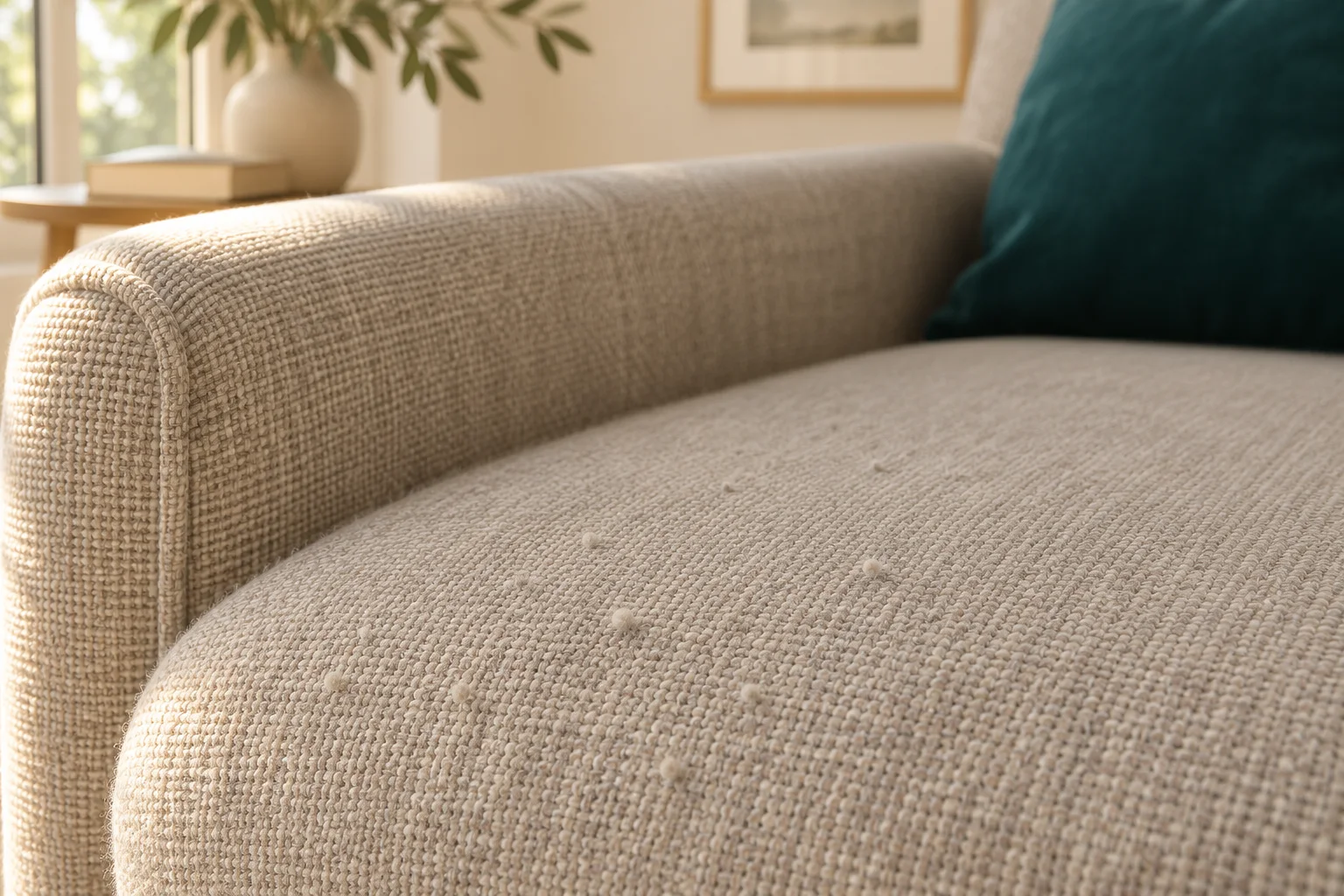
Small balls of fiber on a sofa can be pilling, a surface change that calls for a different response from stain cleaning. First inspect the fabric and check the furniture maker’s instructions. A darker armrest, a pulled thread and a cluster of pills can sit beside one another, but one treatment will not necessarily address all three.
In This Guide
All ArticlesKeep This in Mind
Look closely at the texture before treating it. Tiny fiber pills, loose threads and oily marks need different responses.
What a pill actually is
Sunbrella distinguishes pilling, where surface fibers tangle into small balls, from general fuzziness, where fibers rise without forming those balls. It also distinguishes abrasion, the wearing of fabric through rubbing. These are useful terms when describing a concern to a retailer or cleaner.
Flexsteel explains that excess surface fibers can form pills with use and may continue doing so as those fibers are released. Pilling by itself therefore does not establish that the furniture is dirty or that the underlying fabric has failed. It also does not rule out a separate problem elsewhere on the same cushion.
Avoid deciding from a room-wide photograph. A clear close-up and a picture of the whole piece give much better context.
Sources: Sunbrella: Pilling, Fuzziness and Abrasion · Flexsteel: Fabric Pilling and Care FAQs
Compare the texture before choosing a treatment
The observations below help you describe what you see. They are starting points for assessment, not a diagnosis from appearance alone.
Small rounded fiber clusters
These fit the description of pills. Check the maker’s guidance about removing them before using a tool or treating them as a stain.
Loose loops, pulled yarns or thinning areas
Show these to the furniture retailer or an upholstery repair specialist before cutting or shaving anything. A raised thread may be part of the fabric construction.
Dark or greasy contact areas
Arms and headrests can collect body oils and hair products. Fabric-appropriate cleaning can address oily buildup, but the texture still needs assessment.
Lighter areas or persistent worn patches
Fading and wear may remain after cleaning. OCD HOME’s upholstery guidance makes clear that cleaning cannot restore faded or worn fabric.
Sources: Sunbrella: Pilling, Fuzziness and Abrasion · OCD HOME: Oils on Sofa Arms and Headrests · OCD HOME: Fading and Worn Fabric
Check permission before using a fabric shaver
Flexsteel recommends a battery-operated furniture or sweater shaver for pills on its fabrics. Treat that as manufacturer-specific advice, rather than permission to shave every sofa.
Find the exact fabric name or number and ask the furniture maker whether a shaver is suitable for that upholstery. Be particularly clear if the surface has loops, a raised decorative texture, loose threads or existing damage. If the maker permits a tool, follow both the furniture guidance and the tool’s instructions, including any test-area requirements. Stop if the texture changes or threads catch.
A new sofa with an unexpected surface change is worth documenting before treatment. Keep the order details and send the retailer photographs. The retailer can assess the product and explain the relevant care or warranty terms; do not assume all fabric brands take the same approach.
Keep cleaning and fiber maintenance separate
Do not add a spot cleaner simply because the seat looks fuzzy. Cleaning suitability still depends on the fabric, its condition and the manufacturer’s instructions. A cleaning code describes suitable types of cleaning products; it does not approve a cutting tool or guarantee that a worn surface can be restored.
If there is also food residue or oily soil, explain both concerns before arranging cleaning. At OCD HOME, we assess the fabric and the manufacturer’s instructions before choosing a method. We do not promise that a cleaning appointment will remove pills, repair pulled yarns or reverse fading.
Likewise, removing visible pills does not remove oils or soil within the upholstery. Decide what needs attention first, then agree on the scope.
Sources: OCD HOME: Upholstery Cleaning Codes · OCD HOME: Oils on Sofa Arms and Headrests · OCD HOME: Fading and Worn Fabric
Prepare a useful assessment request
Before refreshing the seating for guests at your Orange County home, inspect the favorite seat as well as the quieter end of the sofa. Record the differences without assuming that every change comes from the same cause.
- Send one photo of the whole piece and close-ups of the affected and unaffected fabric.
- Include the manufacturer, fabric name or number, cleaning label and approximate age.
- Describe whether you see fiber balls, loose yarns, color change or greasy marks, and when you first noticed them.
- List previous cleaning products or tools used, including any shaver or brush.
- Ask whether the next step is cleaning, manufacturer-guided fiber maintenance or a repair assessment.
Sources: OCD HOME: Upholstery Cleaning Codes
Professional Help
Upholstery Cleaning
Explore the process, preparation advice and service options for your Orange County home or business.
Explore the ServiceSources & further reading
OCD HOME’s care guidance combines our published service process with the material-care resources below. Always follow your manufacturer’s current instructions.